Updated: 30 September, 2025
24 September, 2025
Developers are under pressure to deliver fast, but often without the tools to build securely. As vulnerabilities slip through, the need for practical, hands-on secure code training becomes clear. That’s where secure code training comes in.
Whether you’re building web apps, APIs, or embedded systems, the people writing the code are your first line of defense. Equipping them with practical, role-specific skills is one of the most effective ways to reduce software risk early.
We’ll break down what secure code training is, why it’s essential for modern development teams, and how to do it right. We also look at how Secure Code Warrior supports secure code training in practice. While SCW delivers the training experience, our SAMMY platform helps organizations track maturity and progress, shifting from checkbox compliance toward a culture of security, training, and awareness.
What is secure code training?
Secure code training teaches developers and related technical roles how to identify, prevent, and remediate security issues in code. It often includes topics like:
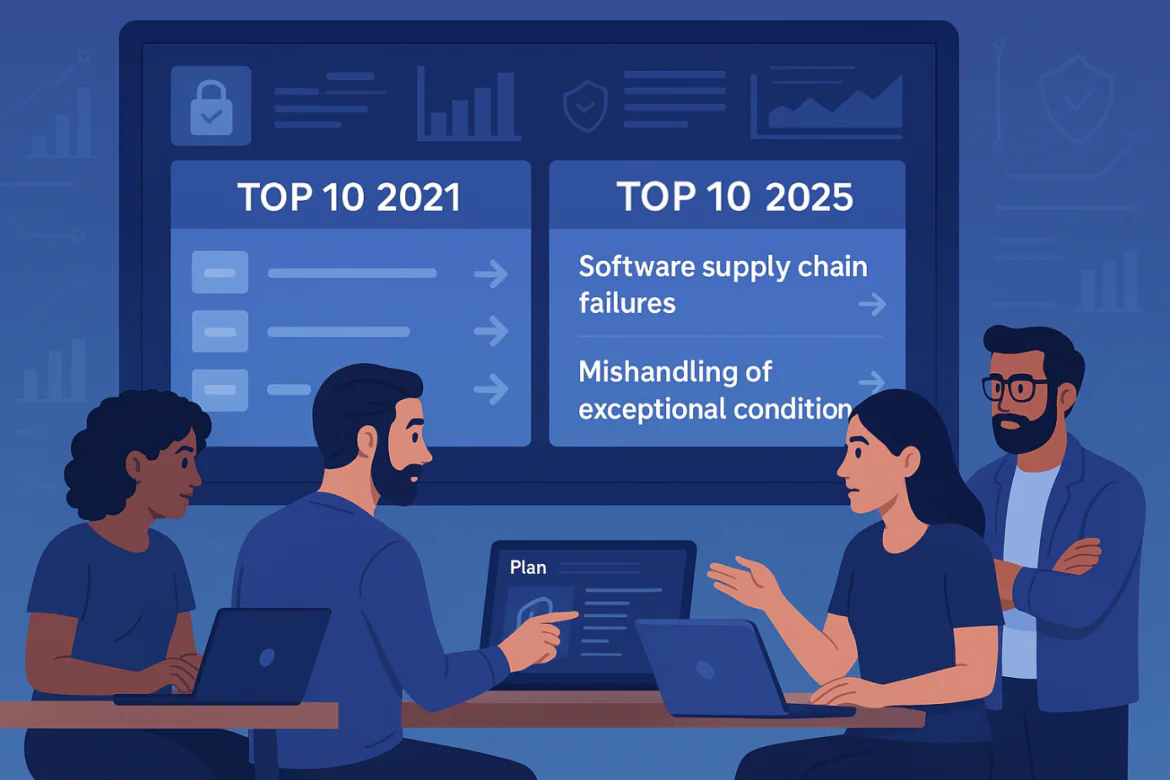
- Understanding the OWASP Top 10.

- Input validation and output encoding.
- Authentication and access control best practices.
- Secure handling of data and secrets.
- Secure development lifecycle (SDLC) principles.
Unlike traditional security awareness sessions, secure code training focuses on how to write secure software. It provides hands-on learning, real-world examples, and contextual guidance aligned to the tools, languages, and frameworks teams already use.
Why do developers and organizations need secure code training?
Most security breaches are caused by mistakes made in the development phase. According to multiple industry reports, over 70% of vulnerabilities are introduced during coding or design. This isn’t because developers don’t care, often, they were never taught how to identify or fix security issues, or their training is outdated, irrelevant, or too disconnected from real-world coding.
For developers:
- Secure code training helps them avoid common traps that lead to vulnerabilities.
- It reduces frustration during code reviews and post-deployment fixes.
- It enables them to build better software, faster and more confidently.
For organizations:
- It lowers the cost of remediation by catching issues early.
- It improves compliance with frameworks like OWASP SAMM, ISO 27001, and SOC 2.
- It strengthens the overall security posture without slowing delivery.
Secure code training also plays a critical role in developer retention. When security isn’t a last-minute fire drill but a skill that’s valued and supported, engineering teams stay more engaged and less burned out.
The Benefits of Starting Early
Training developers after a security incident is like teaching someone to swim after they’ve fallen in. Effective secure code training should start as early as possible, ideally when developers first join the team; and continue throughout their career.
Key benefits of early training:
- Fewer bugs and faster remediation: Developers with secure coding skills write better code upfront, reducing the need for costly rewrites.
- Shorter development cycles: When security is embedded in development, there are fewer blockers later in the process.
- Greater resilience to real-world threats: Developers can quickly recognize and address vulnerabilities without waiting for the security team to intervene.
- Improved collaboration between dev and security teams: When everyone speaks the same language, friction decreases and alignment increases.
Secure Code Training Guide: Training & Awareness OWASP SAMM
The OWASP Software Assurance Maturity Model (SAMM) outlines a structured approach to building secure software. Under the Governance function, the Education & Guidance practice includes a dedicated stream for Training & Awareness; a direct match for secure code training.
SAMM breaks training maturity into three levels:
- Level 1: Basic security awareness for all staff.
- Level 2: Role-specific secure code training for developers, testers, and architects.
- Level 3: Ongoing training with measurable outcomes and integration into the development lifecycle.
Unfortunately, many companies stop at Level 1 – annual videos or slide decks. They meet the compliance requirement, but don’t actually improve behaviour. Moving up the SAMM maturity ladder means shifting from one-time training to continuous, practical learning that adapts to the realities of software teams.
This is exactly where Secure Code Warrior makes a difference.

How to implement secure code training
“We did the annual security training, so we’re covered… right?”
If that sounds familiar, you’re not alone. Many organizations still treat secure code training as a checkbox. But developers don’t learn through slides and quizzes. They learn by doing.
To build a real security culture, training and awareness need to go beyond compliance. They need to be relevant, continuous, and practical. That’s where Secure Code Warrior (SCW) comes in.
We recommend SCW in SAMMY as part of the Education & Guidance practice in OWASP SAMM, because it supports the full maturity model in the Training & Awareness stream, and it actually makes developers want to engage.
1: Make Training Developer-First and Role-Specific
Effective secure code training starts with relevance. SCW customizes the experience by role, programming language, and tech stack. A front-end developer working in React doesn’t see the same content as a DevOps engineer focused on infrastructure security.
This avoids the fatigue that comes from one-size-fits-all content and ensures developers can immediately apply what they’ve learned in their daily work.
2: Replace Passive Learning with Real Challenges
Rather than clicking through multiple-choice questions, SCW users tackle live coding scenarios based on real vulnerabilities like SQL injection, XSS, or insecure deserialization. Game mechanics, badges, points, and leaderboards, keep developers engaged.
This builds actual secure coding skills, not just theoretical knowledge.
3: Integrate and Measure
To scale training effectively, integration and measurement are key. SCW provides:
- Dashboards for compliance tracking and team insights
- LMS and SSO integration for easy rollout
- Learning paths that align with sprints or team structures
- Regular assessments and tournaments to reinforce progress
You get visibility into participation, progress, and outcomes; making it easier to show return on investment and demonstrate improvement over time.
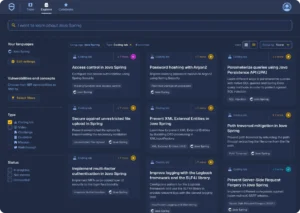
Mapping SCW to SAMM Maturity Levels
- Level 1: SCW enables quick rollout of awareness training tailored to technical roles. Developers see examples of real threats in familiar code.
- Level 2: Curated, role-specific paths build deeper skills based on actual job responsibilities. Backend, frontend, QA – each gets what they need.
- Level 3: Continuous training is embedded into the SDLC. Dashboards track progress, while tournaments and team challenges reinforce learning.
By using SCW, organizations can show real progress in developer readiness, team capability, and risk reduction.
From Compliance to Culture
Investing in secure code training isn’t just about passing audits. It’s about building a security culture where everyone understands their role in protecting the systems they build.
Secure Code Warrior supports this shift by helping developers build hands-on, role-specific secure coding skills. It reinforces awareness through real practice; not just theory.
SAMMY, our platform for managing OWASP SAMM assessments and improvements, helps organizations turn those best practices into clear, measurable actions.
If you want to turn training into lasting behavior change, SCW is one of the most practical places to start.
Use SAMMY to track progress and guide your security improvements and use SCW to build the skills that make those improvements stick.